
Cloud-Native macOS Development

The Future of Cloud-Native macOS Development: Trends to Watch

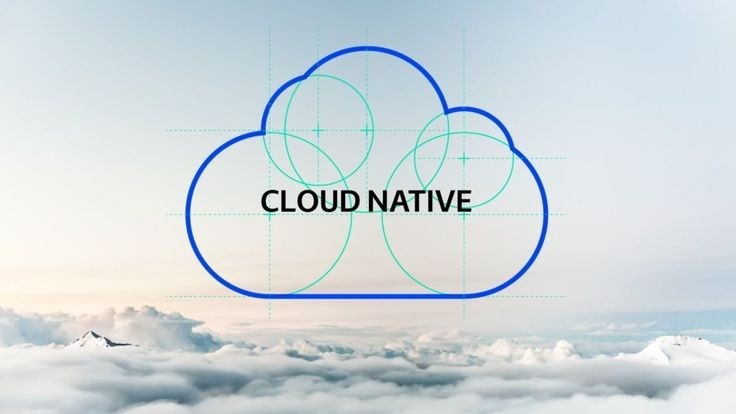
Cloud technology is changing how software teams build and manage Apple applications. Instead of relying only on office computers, development teams can use remote Mac hardware and cloud services. Cloud-Native macOS Development offers a way to make development more flexible while supporting testing, collaboration, and software delivery. Several important trends are shaping the future of this approach. 1. The Growing…

RAM Tier, Large Language Models

Memory Management Guide: Choosing the Right RAM Tier for Large Language Models on Mac

Running large language models on a Mac requires careful memory planning. Model size affects performance and determines how much memory is needed for smooth operation. Choosing the correct RAM Tier helps prevent slow responses and unexpected memory shortages. Apple Silicon uses unified memory, allowing the CPU and GPU to share the same physical memory pool. This design supports local AI…

Data Privacy and Local AI Hosting: Why Choose Mac Cloud Infrastructure

Artificial intelligence is becoming an important part of modern software development. Businesses and research teams use AI to process information, test models, and improve daily operations. However, sensitive information requires careful protection during these activities. Local AI Hosting offers an approach that gives developers greater control over where AI workloads run and how information is handled. Mac cloud infrastructure provides…

AI-Powered Autonomous Agents

Building AI-Powered Autonomous Agents Running 24/7 on a Cloud Mac

Artificial intelligence is becoming useful for more than answering questions. Modern systems can analyse information, complete tasks, monitor activity, and make decisions based on clear instructions. Building AI-Powered Autonomous Agents creates opportunities for continuous automation without requiring constant manual control. A Cloud Mac provides a remote computing environment for running these systems over extended periods. Building AI-Powered Autonomous Agents requires…

PyTorch and TensorFlow-Metal

Running PyTorch and TensorFlow-Metal Workloads on Remote Apple Silicon

Machine learning requires computing resources that can handle large amounts of data and complex calculations. Developers often need suitable hardware to train models and test artificial intelligence applications. Apple Silicon provides an option for running machine learning tasks through its powerful processors and unified memory architecture. PyTorch and TensorFlow-Metal support machine learning development on compatible Mac systems. Remote Apple Silicon…

Electron Apps

How to Build Electron Apps for macOS on Cloud Apple Silicon Hardware

Electron supports desktop software built with familiar web technologies. HTML creates the interface, CSS controls its appearance, and JavaScript manages application behavior. However, a macOS release still requires a suitable Mac environment. Cloud Apple Silicon hardware provides access to a remote Mac without requiring a physical Mac for every developer. This setup supports the process of building, testing, signing, and…

Xcode build times

Optimizing Xcode Build Times on Apple Silicon M4/M6 Cloud Instances

  Developing an iOS application involves compiling, testing, and fixing. Each code change may trigger a new build before the application can run. Slow Xcode build times interrupt concentration and delay delivery. Apple Silicon cloud instances offer remote access to macOS and Xcode. The M4 platform provides strong performance for many development tasks. M6 cloud instances may offer another option…